
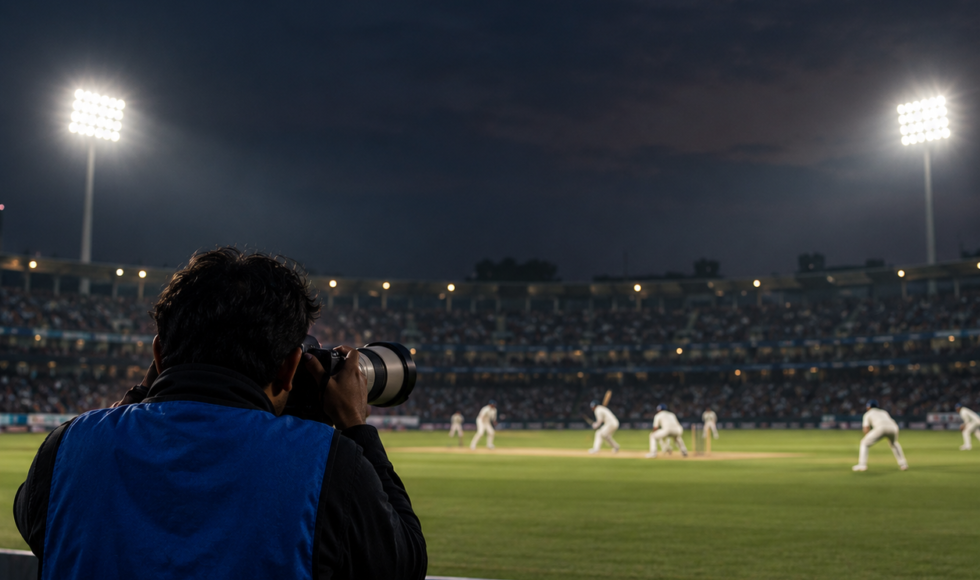
SPORTS MEDIA & JOURNALISM
Who doesn’t love knowing what their favourite sportsperson is wearing today? Or which restaurant they prefer, or where they are likely to be spotted when they are not on the field?
Today, sports media and journalism constitute an industry that constantly keeps its users, viewers and fans updated, often without missing a moment. From live match coverage and post-match analysis to behind-the-scenes glimpses into the lives of sportspersons, sports media has transformed the way audiences consume and engage with sports.
Before we delve into the advantages, disadvantages and challenges arising from the increased use of sports media and journalism, let us briefly trace the evolution of this industry and examine how it has reached its present form.
It is interesting to note that sports media and journalism, much like the sports they cover, have evolved from the black-and-white television era to the digital and OTT-driven landscape that we see today.
- The Doordarshan Era: The Beginning
During the mid-1980s and the 1990s, Doordarshan played a dominant role in sports broadcasting in India. With limited television channels and restricted sports programming, it was one of the principal sources through which Indian audiences accessed televised sporting events.
Cricket gradually became a household ritual, with Sunday broadcasts bringing families together in front of their television sets. Over time, watching cricket became more than just a sporting activity; it developed into a shared national experience. This period also reflected a broadcasting environment in which the government exercised considerable influence over television programming and the narratives presented to viewers.
- The Cable Television Revolution: 1990s to Early 2000s
The economic liberalisation of 1991, coupled with the expansion of cable television and the arrival of satellite broadcasting, transformed the Indian media landscape.
Suddenly, viewers had a wider range of channels to choose from, including ESPN, Star Sports and Ten Sports. Sports broadcasting was no longer confined to a limited number of programmes or channels. Audiences could access a wider variety of sporting events, while dedicated sports channels brought greater continuity to sports coverage.
This period also witnessed the emergence of professional sports anchors, commentators and analysts, who became an integral part of the viewing experience. Sports coverage increasingly incorporated expert opinions, pre-match discussions, post-match analysis and dedicated programming. Alongside these developments, the commercialisation of sports media gathered momentum, with advertising and sponsorship becoming increasingly important to the industry.
- The IPL Revolution: Sports Meets Entertainment
The introduction of the Indian Premier League (IPL) in 2008 brought about another significant transformation in Indian sports broadcasting.
The IPL reimagined cricket as a combination of sport, entertainment and commercial enterprise. Franchise-based teams, player auctions, celebrity ownership and innovative broadcasting formats created a new sporting ecosystem that attracted audiences beyond traditional cricket enthusiasts.
This transformation also placed greater emphasis on television ratings (TRPs), viewership figures, advertising revenues and, subsequently, digital engagement metrics. The success of a sporting event was increasingly measured not only by what happened on the field but also by how many people watched it, how long they remained engaged and how effectively that engagement could be monetized.
Sports media was no longer merely reporting sporting events; it was becoming an integral part of the business of sports.
- The Smartphone and Social Media Era: Bringing Fans Closer
The 2010s ushered in the era of smartphones, social media and instant digital communication. Platforms such as Twitter (now X), YouTube and Instagram changed the way people accessed sporting information and interacted with their favourite sportspersons.
The relationship between athletes and their fans became more direct and personal. Audiences no longer had to rely exclusively on television interviews, newspaper reports or press conferences to learn about their favourite players. A simple click could offer a glimpse into an athlete’s training routine, personal interests, holidays, favourite restaurants and everyday life.
Sportspersons consequently began to assume a role that extended beyond their identity as athletes. They increasingly became content creators, influencers and personal brands in their own right.
While this development brought fans closer to the people they admired, it also began to blur the boundaries between an athlete’s professional life and personal space. The public’s growing curiosity about athletes’ lives away from the field would eventually raise important questions about privacy, media ethics and responsible reporting.
- The OTT Era: Sports at Our Fingertips
Today, we are firmly in what may be described as the social media and digital streaming era. Alongside smartphones and social media applications, over-the-top (OTT) platforms such as JioCinema, JioHotstar and SonyLIV have transformed how audiences watch sporting events.
Depending on the platform and the applicable subscription model, viewers can access live sports through free or paid streaming services. A wide variety of sporting events can now reach audiences across geographical boundaries, making sports more accessible than ever before.
Digital platforms have also introduced features that offer viewers greater control over their viewing experience, including replays, highlights, multiple camera angles and, where supported, the ability to pause or rewind live coverage. Sports content is no longer restricted to the television screen or a fixed broadcasting schedule; it can be accessed on demand and consumed across devices.
This transformation has expanded the reach of sports while creating new opportunities for broadcasters, advertisers, sponsors and sporting organisations.
- The Sportsperson as a Content Creator
It would not be inappropriate to say that we are now living in an era in which sportspersons are not merely athletes. They are also YouTubers, podcasters, influencers and entrepreneurs who engage with their audiences beyond their sporting commitments.
From sharing training videos and personal milestones to participating in podcasts and creating sponsored content, athletes have greater control over how they present themselves to the public. Their social media presence can strengthen their personal brands, attract commercial partnerships and build communities of loyal followers.
However, this increased visibility also brings with it a set of questions. Where should the line be drawn between public interest and private life? Does the growing demand for constant updates place undue pressure on athletes to remain accessible to their audiences? And how should the media balance its responsibility to inform the public with its obligation to report ethically and respect individual privacy?
As sports media and journalism continue to evolve, these questions become increasingly relevant. The same platforms that bring fans closer to their sporting heroes can also contribute to misinformation, sensationalism, intrusive reporting and the commercial exploitation of an athlete’s image.
It is, therefore, important to examine not only how sports media has transformed the sporting experience, but also the legal, ethical and practical challenges that accompany this transformation.
By
~ Adv. Sanika Lalit
